


 sales@itpstyli.com


3/12/26
Best Practices for Preventing Stylus Deflection Errors
You can program a CMM perfectly and still end up chasing inconsistent results. One run looks clean, and the next shows slight variation, yet nothing in the code appears to have changed.
In many cases, subtle stylus deflection is the hidden variable. Having best practices for preventing stylus deflection errors on hand is what separates stable inspection processes from frustrating rechecks. Small mechanical factors, not software mistakes, are typically the real cause. When those factors are controlled intentionally, measurement results become far more predictable and trustworthy.
How Stylus Deflection Happens During Measurement
Stylus deflection is a mechanical response to contact. When a probe touches a surface, force is transferred through the stylus stem before the measurement point is registered. If that force causes even slight bending, the recorded point shifts from its true position.
The longer or more leveraged the stylus assembly, the greater the opportunity for subtle flexing during contact. That movement may be microscopic, but in tight-tolerance inspection, it can influence repeatability and feature accuracy. Because deflection happens at the moment of contact, it goes unnoticed until variation appears in the data.
Select the Shortest, Stiffest Stylus Possible
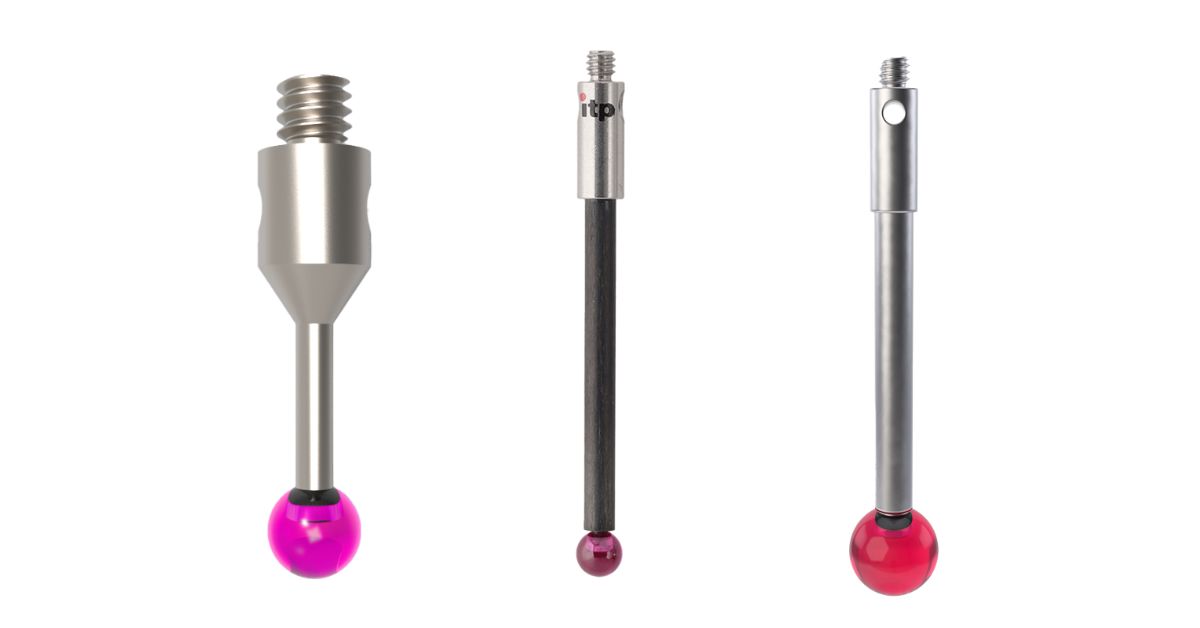
Stylus geometry plays a direct role in stability. Shorter styli reduce leverage, which minimizes bending during contact. Whenever possible, choose the shortest configuration that still meets the required features.
Material selection also matters. Stiffer materials, such as carbide or ceramic stems, resist flexing more effectively than thinner or more elastic alternatives. Larger stem diameters further improve rigidity.
Don’t forget the influence of ball size, too. Smaller ruby balls reduce mass at the tip, lowering inertia during movement. Manufacturers evaluating CMM probe tips should balance reach requirements with stiffness to achieve stable, repeatable contact.
Optimize Probe Force Settings for the Application
Probe force must match the inspection task. Excessive force increases stylus bending, while insufficient force may cause incomplete contact or unreliable triggering.
Different materials require different approaches. Softer components demand lighter contact to prevent surface damage and unnecessary stylus flex. Harder materials tolerate higher force but still benefit from moderation.
Modern CMM systems allow fine adjustments to trigger force or scanning pressure. Regularly reviewing probe parameters ensures force levels align with part geometry and stylus configuration. Proper calibration after adjustments keeps measurement data consistent across inspection runs.
Maintain Proper Stylus and Probe Alignment
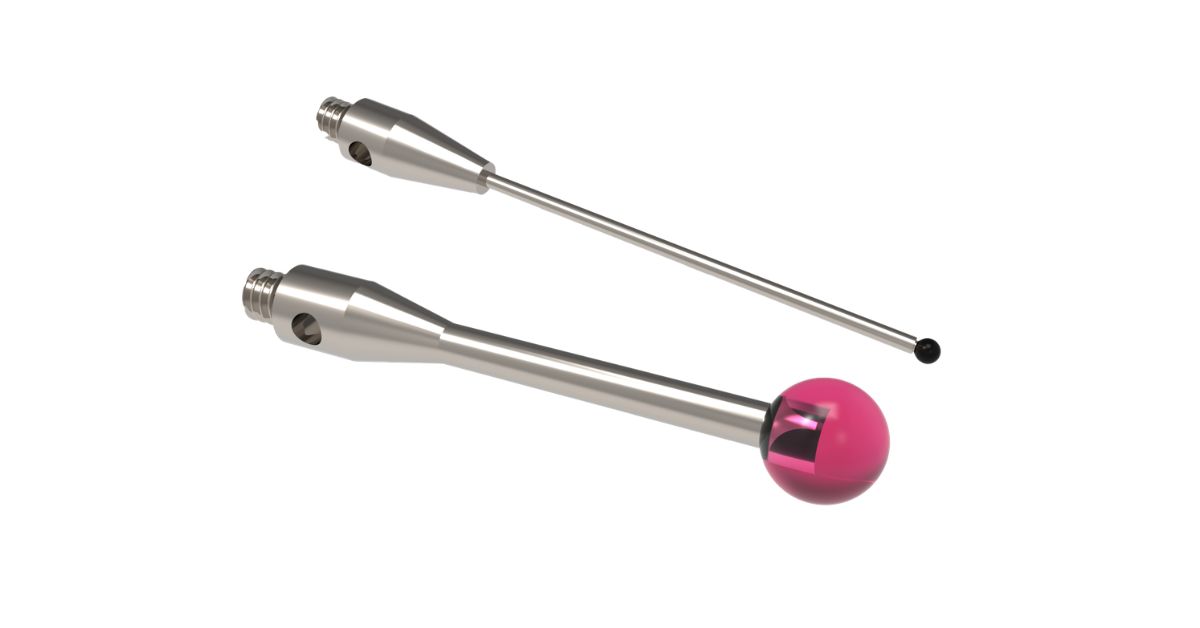
Every stylus assembly is only as stable as its mechanical stack. Even minor misalignment at threaded connections or between extensions can introduce micro-movement during probing. That movement may not be visible, but it affects repeatability.
Improper seating between the probe head and stylus creates uneven load transfer through the assembly. Over time, repeated measurement cycles can amplify looseness in connections. Verifying torque and confirming secure assembly reduces unintended mechanical shift.
Requalification after any stylus change ensures that the system’s defined geometry reflects its true physical position. Mechanical integrity at the connection level supports stable, repeatable measurements.
Control Environmental Conditions in the Metrology Space
Environmental stability affects probe behavior more than many operators realize. Temperature fluctuations can alter material expansion in both the part and the stylus assembly.
Vibration from nearby machinery introduces subtle movement that affects probe contact timing. Even minor air currents can influence lightweight styli during delicate measurements.
Maintain a controlled temperature and minimize floor vibration by isolating inspection areas to protect measurement accuracy. Environmental consistency reduces variables that contribute to unpredictable deflection behavior.
Use Appropriate Measurement Speeds
Inspection speed directly influences stylus performance. Higher approach and scanning speeds increase momentum at the moment of contact.
Greater momentum results in increased bending forces. Slowing measurement speed during critical feature inspection reduces impact stress on the probe tip.
Programming thoughtful acceleration and deceleration values further stabilizes contact. Balancing productivity with precision ensures that cycle times remain efficient without sacrificing dimensional integrity.
Implement Routine Stylus and Probe Maintenance
Wear and contamination degrade measurement performance over time. Oil or debris buildup on the stylus ball interferes with clean contact. Scheduled inspection of all components helps identify early signs of wear.
Replacing worn components promptly prevents compounded errors. Maintaining clean contact surfaces and secure connections supports consistent trigger behavior and reduces unnecessary deflection.
Train Operators on Consistent, Low-Force Technique
Even automated systems rely on skilled programming and setup. Operator decisions directly affect how the probe approaches and contacts a feature
Encouraging low-force, direct-contact programming reduces lateral stress on the stylus. Consistent probe qualification practices further limit variability between shifts or teams.
Ongoing training reinforces proper handling during stylus changes and setup adjustments. Knowledgeable operators recognize early signs of instability and correct them before measurement errors escalate.
Standardize Stylus Configurations Across Programs and Teams
Variation between inspection programs can introduce inconsistency. When teams use different stylus lengths or materials for similar features, measurement results may vary.
Standardizing approved stylus assemblies for recurring part families improves repeatability. Documented configurations simplify requalification and reduce the need for trial-and-error adjustments.
Clear internal standards also accelerate onboarding for new operators. Consistency across departments strengthens confidence in inspection data and reduces unexpected deviations.
Validate Probe Paths To Minimize Side Loading
Probe path strategy influences how force is applied to a feature. Approaching at steep angles increases the likelihood of lateral stress.
Whenever possible, align probe movement perpendicular to the measured surface. Straight-line approaches reduce sideways bending.
Simulation tools within CMM software help identify high-risk paths before execution. Reviewing programmed paths during process validation ensures that contact forces remain balanced and controlled.
Use Multi-Stylus or Modular Probe Systems for Complex Features
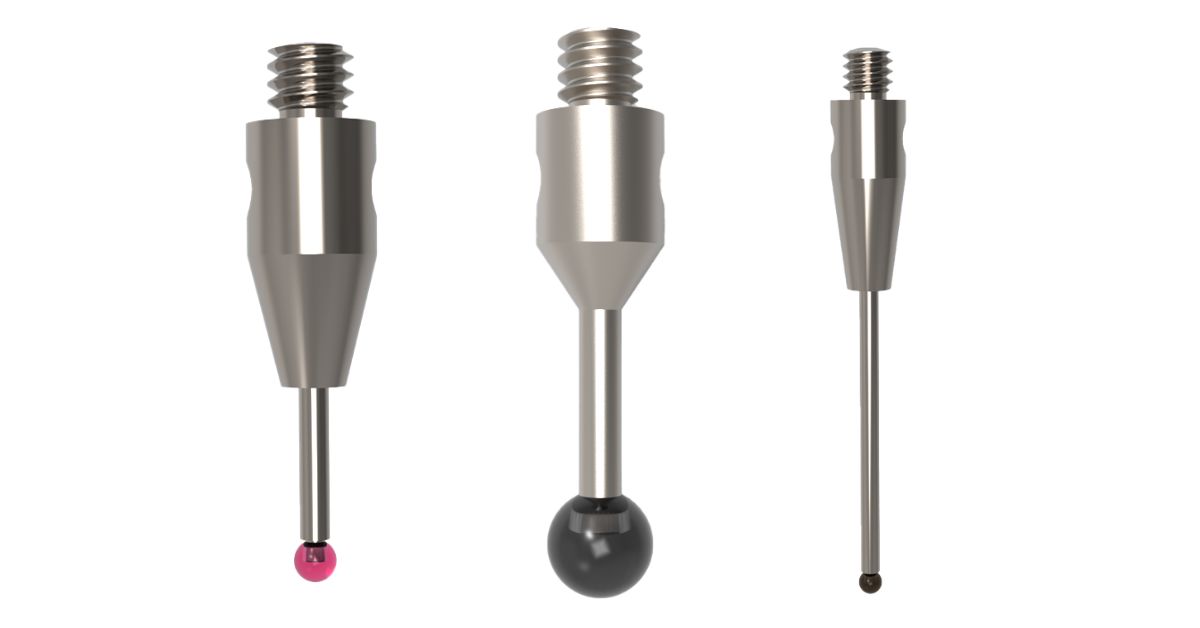
Complex geometries might require extended reach or angled access. Rather than relying on a single long stylus, consider modular systems designed for stability.
Multi-stylus configurations allow operators to measure multiple features without excessive extensions. Modular probe heads also enable optimized positioning while maintaining stiffness.
Selecting the right configuration for intricate components reduces leverage and lowers the chance of deflection. Thoughtful system design supports both accessibility and measurement integrity.
Improve Measurement Accuracy With High-Quality Stylus Solutions
Reliable inspection performance begins with dependable components. High-quality styli manufactured to strict tolerances provide the consistency required for precision measurement.
itpstyli offers a broad range of replacement styli, extensions, holders, and accessories designed for CMM and gear measurement applications. Same-day shipping on in-stock products and fast turnaround on custom configurations help manufacturers minimize downtime.
Teams seeking dependable performance can also take advantage of the Design Your Own Styli option to match exact inspection requirements. By combining expert selection with the best practices for preventing stylus deflection errors, manufacturers strengthen accuracy and reduce rework. Maintain confidence in every measurement cycle!